
The Unspoken Rules
of Korean Dining
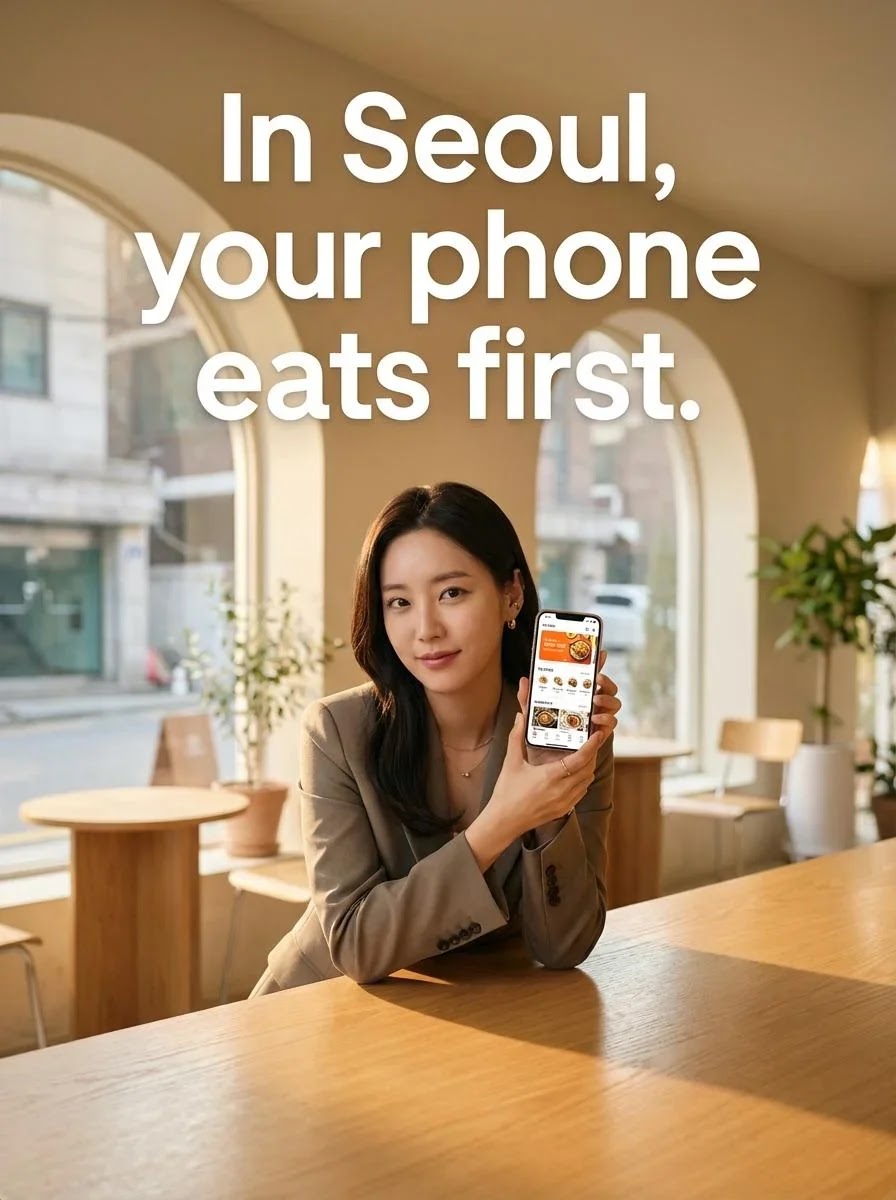
Why empty tables aren't free, and how your phone eats first in the world's most hyper-digitized food scene.
In Short
"The seemingly empty tables in popular Korean restaurants are not actually available; they are digitally reserved for users in a virtual queue. The core life hack is to abandon the walk-in mindset and instead use 'smart waiting' apps to secure your spot hours in advance, just like a local."
Foreigner Expectation
Visitors often anticipate that an empty table means immediate seating, a universal sign of availability. This romanticized view clashes with the reality of a hyper-digitized system.
Local Reality
The polite refusal is not personal; it is the enforcement of a digital protocol. Koreans see the "empty" space as a placeholder for the next digital ID in line.

What Koreans Actually Notice
The Kiosk Scan
Locals immediately scan the entrance for a tablet-like kiosk or a small QR code stand—the primary signals that a digital queuing system is in use.
The 4 PM Rule
Arriving at 5:30 PM is a rookie mistake. The battle for a table began online at 4:00 PM sharp.

Monitoring the queue in real-time is the only way to ensure entry.
The "Invisible" Friction
The "Empty" Illusion
Believing that visible, unoccupied seats are an invitation to walk in.
Personal Rejection
Interpreting "we're full" as a slight, rather than a factual statement about a digital list.
Physical Priority
Assuming being at the door grants priority over someone waiting remotely via an app.
Why it’s like this in Korea
This system stems from a deep-seated cultural emphasis on "systemic fairness" and efficiency. The digital queue is seen as the most impartial method, honoring a first-come, first-served principle in the order of digital registration.
"Allowing a walk-in would be considered unfair to the dozens of people who have followed the protocol and are patiently waiting elsewhere."

Navigate Like a Local
Download Tools
Install CatchTable and Naver Maps. Without these, you are effectively invisible to the dining ecosystem.
The '3:30 PM Check'
Open your app early. Popular spots open their dinner waitlist at 4:00 PM sharp. Be ready to tap.
Remote Queuing
Use "won-gyeok jul-seo-gi". Register from your hotel or the subway to save hours of physical waiting.
Master the Kiosk
If you see only a number pad, look for "English" or ask:
"이메일 로그인 가능한 키오스크인가요?"
(Can I log in via email at this kiosk?)
Silent Entry
When the app notifies you, walk in and show the "Entrance Confirmation" (입장 확인) screen. No words needed. You've earned your seat.



No comments:
Post a Comment