
Seoul Life Guide
The Unspoken Rules of Korean Waste Disposal
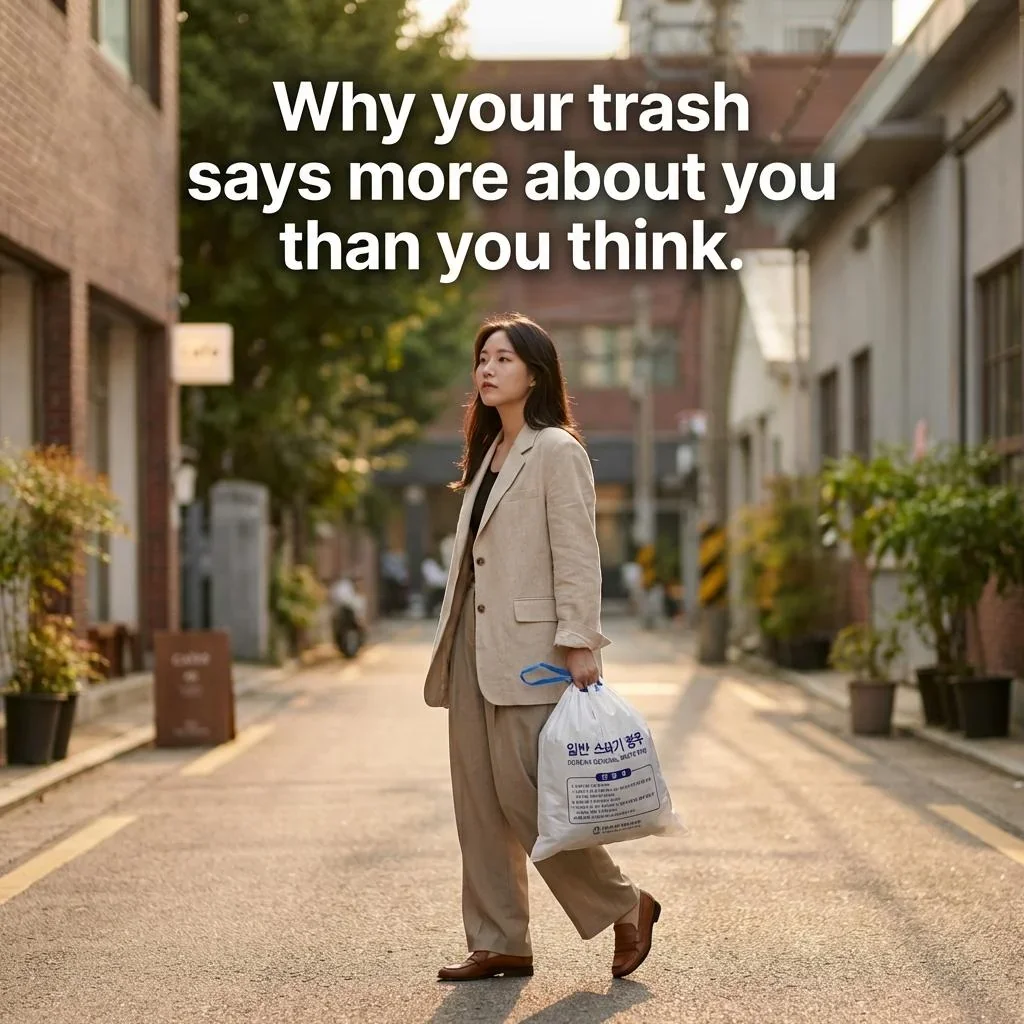
Why your trash says more about you than you think. A practical guide to Korean etiquette.
In Short
"In Korea, trash disposal is a civic responsibility, not a simple act of throwing things away. The core life hack is to purchase specific, government-issued bags
and meticulously
clean and separate
all recyclables before disposal."
What Visitors Expect vs. Reality
The Expectation
Visitors assume waste disposal is a universal utility, expecting public bins on every corner and a simple system.
The Reality
A near-total absence of street-level bins and a highly regulated, pay-per-volume system that requires active participation.

What Koreans Actually Notice
Using a plain plastic bag instead of the official district-issued bag. Placing un-rinsed plastic containers or coffee cups in the recycling area. Mixing items like chicken bones or eggshells into the food waste bags. Leaving trash out on a non-collection day, disrupting neighborly cleanliness.
Common Myths
The complexity of the system leads to frequent errors by those unfamiliar with its logic. These small mistakes can cause significant issues downstream. MYTH 01
All food-related scraps are "food waste."
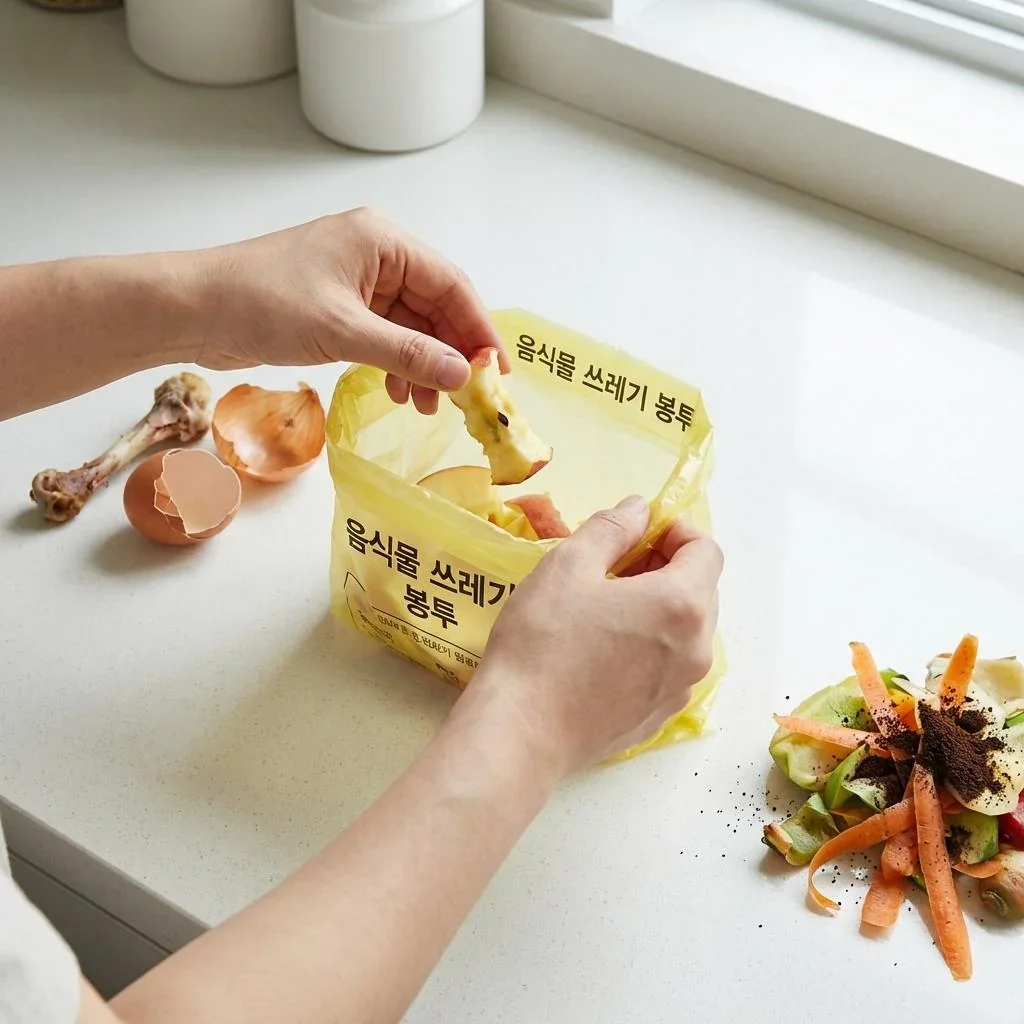
FACT: Bones & shells are general waste. MYTH 02 One district's bag works in another. FACT: Bags are strictly district-specific. MYTH 03 Recycling is one single bin for all. FACT: Clean & separate by material type. MYTH 04 Leave street food trash anywhere. FACT: Return it to the original vendor.
Why It's Like This
High population density and limited landfill space led to the "Jongnyangje" (Pay-As-You-Throw) system. It makes individuals conscious of consumption, fostering a strong sense of collective environmental responsibility.
Actionable Guide: Navigate Like a Local
01
Identify your District
Look at street signs or map apps for your Gu (구), e.g., "Mapo-gu". Bags are district-specific. Why: Waste management is funded and managed at this local level. 02
Buy the Correct Bags
Visit convenience stores (GS25, CU). Ask for "Ilban sseuregi bongtu" (General) and "Eumsikmul sseuregi bongtu" (Food). Why: The cost of the bag pays for its collection and processing. 03
Set Up Your Home System
Use three separate containers: one for general waste, one for food waste, and a larger one for clean recyclables. Why: Separating at the source prevents contamination and speeds up disposal. 04
Master the Food Waste Rules
Only compostables go here. Hard items (bones, pits), fibrous skins (onion), and tea bags are General Waste . Why: Food waste is often processed into animal feed. Non-compostables are harmful. 05
Use an App for Uncertainty
Download "Bin Buddy" . Snap a photo of any item to learn the correct disposal rules for your specific district. Why: This removes guesswork for complex items like mixed packaging. 06
Check Local Collection Rules
Check your lobby notice board for the disposal schedule. Recyclables often have a specific pickup day. Why: Following the schedule prevents clutter and ensures timely pickup.
Culture in a Can
Learning to manage waste in Korea is more than a practical chore; it is an exercise in cultural understanding. By engaging with this system, you move from being a passive observer to an active participant in the social fabric, showing respect for the shared environment and the collective effort that maintains it.




No comments:
Post a Comment