
Social Etiquette Guide
The Unspoken Social Contract
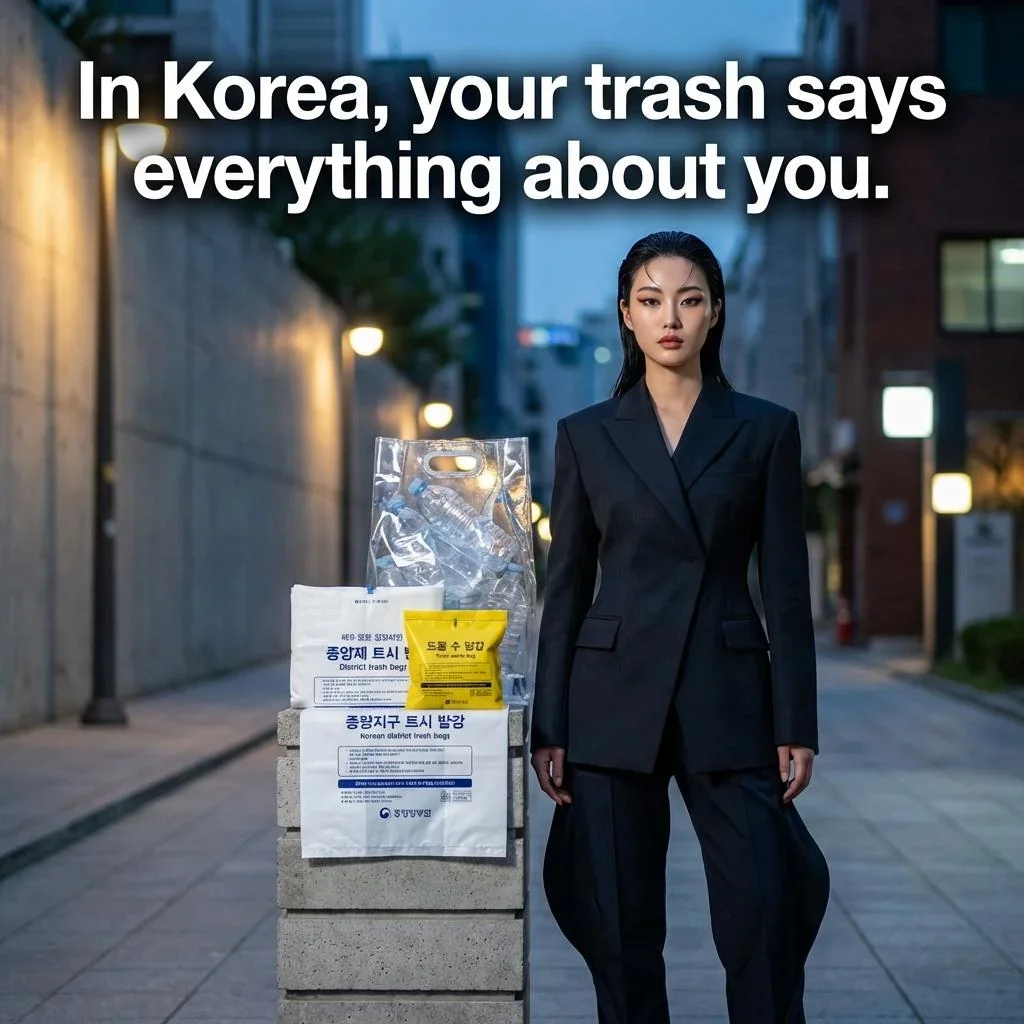
In Korea, your trash says everything about you. It's not just waste; it's a meticulously regulated display of community respect.
In Short
"In South Korea, waste disposal is a meticulously regulated system reflecting a deep sense of collective social responsibility. You pay for what you cannot recycle, and sorting is a public display of consideration."
Expectation vs. Reality
The Visitor's Mindset
"I'll just find a public bin."
Most visitors anticipate a straightforward process: find a public bin or use a simple co-mingled recycling container. They expect the system to adapt to their convenience.
The Korean Reality
A high-precision local duty.
A near-total absence of public trash cans and a home disposal system requiring surgical precision. This is the first significant "culture shock" for many.
What Koreans Actually Notice
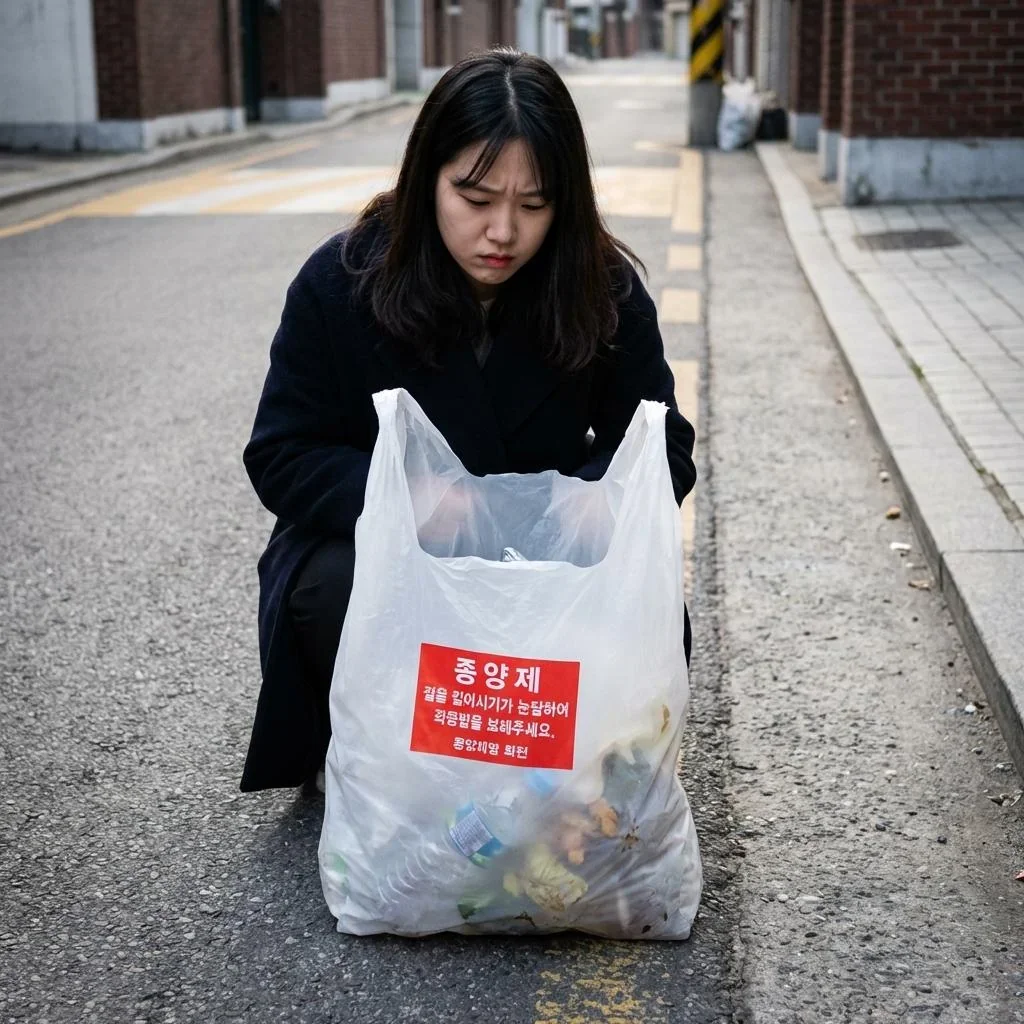
Locals observe the details of waste disposal as a reflection of your social awareness. Mistakes are visible signals of a failure to participate. 01
Wrong District Bag
Using a bag from a different 'gu' signals a lack of local knowledge and respect for the local budget. 02
Food Residue
Leaving food in containers is seen as inconsiderate to the workers who handle your waste. 03
The Clink
The sound of glass bottles inside an opaque general waste bag is an immediate giveaway of improper sorting. 04
Bad Timing
Leaving trash out on the wrong day disrupts the entire neighborhood's visual harmony.
The "Jongnyangje" System
The Volume-Based Waste Fee System makes individuals financially responsible for their non-recyclable waste. The disposal cost is built into the official bags.
Financial Incentive
Recycle more to spend less on official general waste bags.
Social Harmony
Proper sorting is a gesture of respect for neighbors and sanitation workers.
The Local Playbook
01
Procure the Correct Bags
Go to any convenience store and ask the clerk. They are kept behind the counter. General Waste "Ilban sseuregi bongtu juseyo" Food Waste "Eumsikmul sseuregi bongtu juseyo" 02
Internalize the "Big Three"
Set up three separate bins in your home immediately: General, Food, and Recyclables. Pre-sorting prevents cross-contamination and makes the system manageable. 03
Master the Recyclables Rule
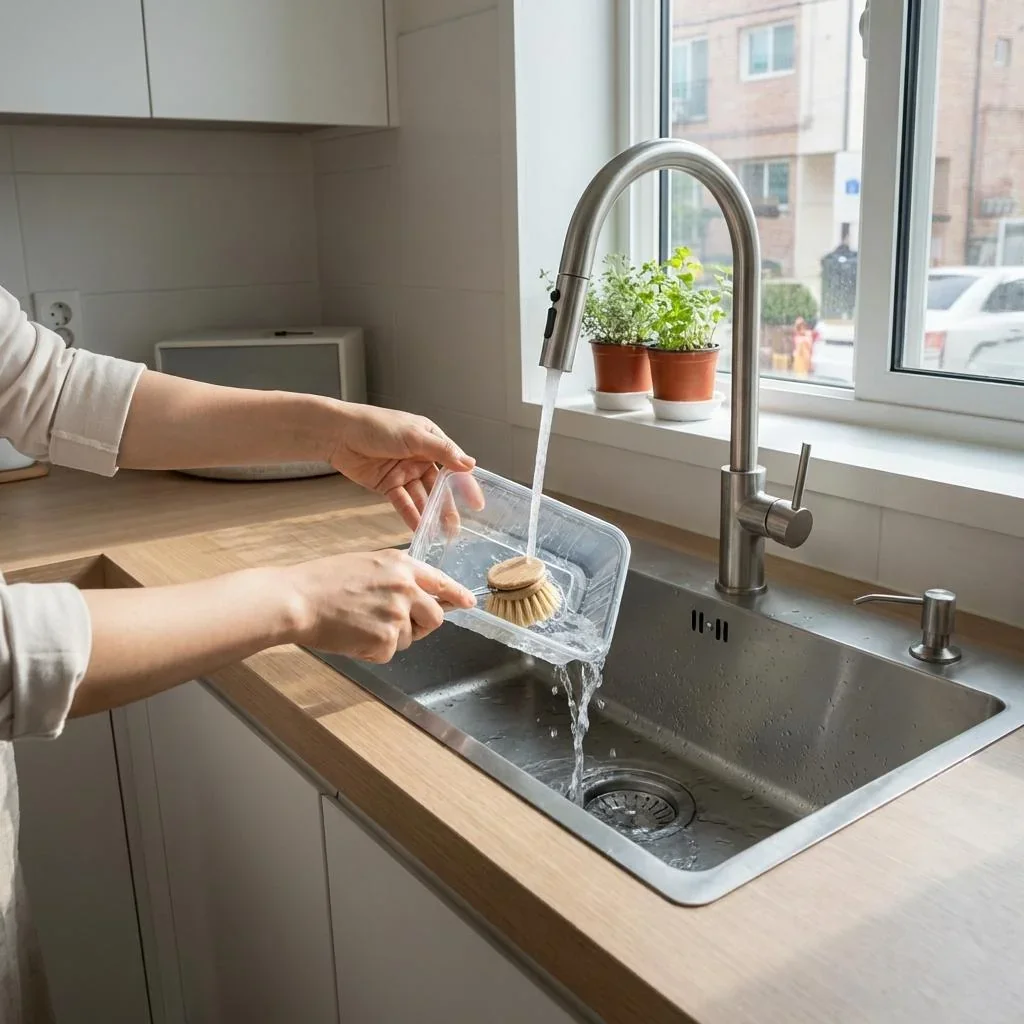
Clean and Separate: Plastic, vinyl, paper, glass, and cans must be rinsed clean. Remove labels and flatten items. One dirty item can ruin an entire batch. 04
NOT Food Waste Checklist
Korean food waste is recycled into animal feed. If it's too hard for an animal to eat, it's general waste. Bones Seafood Shells Egg Shells Fruit Pits Tea Bags Onion/Garlic Skins 05
The Tech Edge
Bin Buddy
Uses your camera to identify items and provides district-specific sorting instructions in English.
Ppaegi (빼기)
The standard app for bulky items like furniture. Register and pay for stickers online instantly. 06
Confirm Local Schedule
Every neighborhood has its own rhythms. Ask your landlord for the collection times (usually at night) and the exact curb location. This prevents your trash from being "shamed" by being left behind.
More Than Waste
Mastering this system is a lesson in cultural integration. By sorting your waste with care, you are no longer just a visitor—you are an active participant in the harmony of modern Korean life.




No comments:
Post a Comment